
*Beware Spoilers*
“She knew one thing: she was not pleased or proud to be able to read the alethiometer – she was afraid. Whatever power was making that needle swing and stop, it knew things like an intelligent being.”
Philip Pullman, His Dark Materials
Philip Pullman has spent the best part of the last three decades building the complex ‘His Dark Materials Universe,’ a saga that awaits completion with his third and final instalment of The Book of Dust. Throughout his sprawling epic, we embark on a journey with the book’s main protagonist, Lyra Belacqua, in a fight against the dark forces of the Magisterium and her own parents’ ambition as she moves ever closer to her secret destiny.
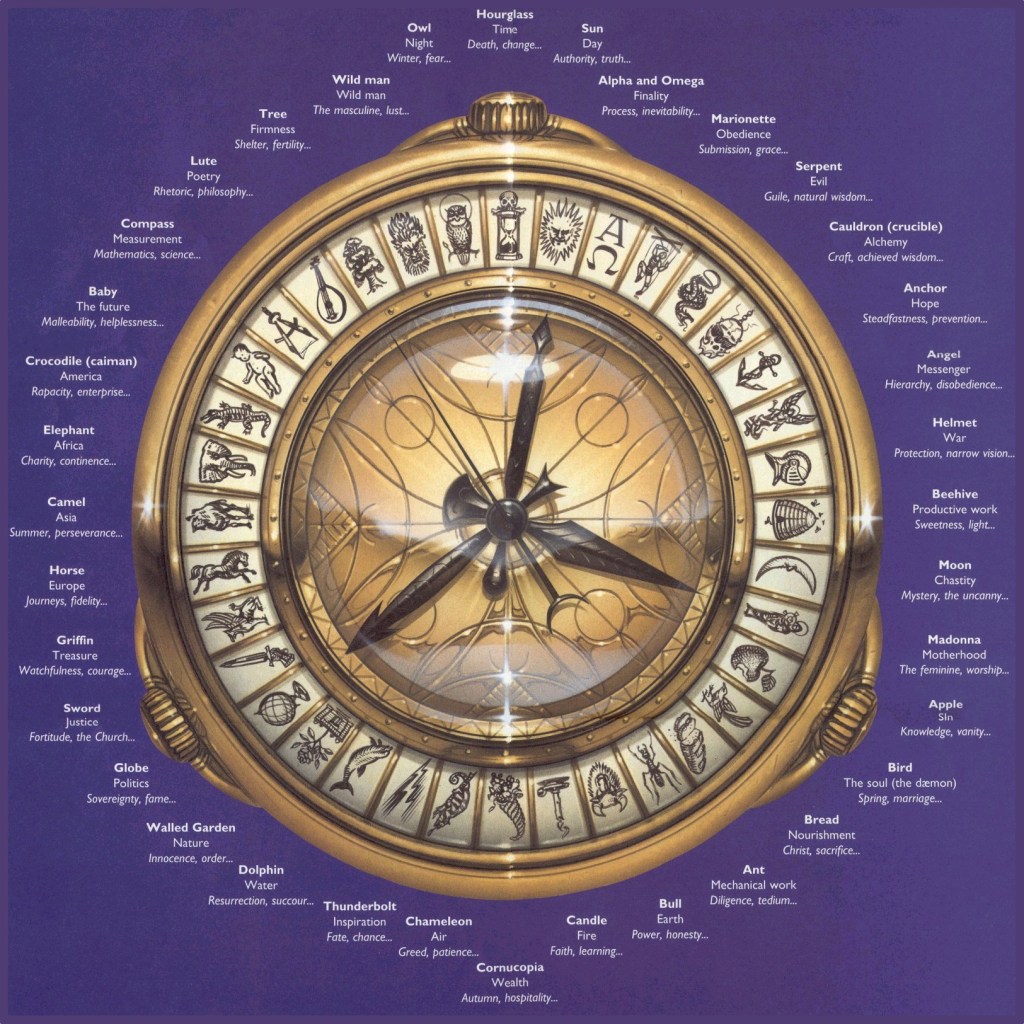
To aid her in her quest, Lyra is given an Alethiometer, a device which, according to The Ringer, “can reveal the truth to anyone who can successfully interpret its symbols after asking it a question.” Aletheia is the Greek word for truth, so that the name signifies ‘truth measure.’ It is described as a golden compass featuring 36 symbols around its outer rim, each one with near-infinite meaning that must be interpreted by the reader.
Pullman was influenced by John Milton’s Paradise Lost from which he took the title ‘His Dark Materials,’ but it also inspired the idea of the golden compass:
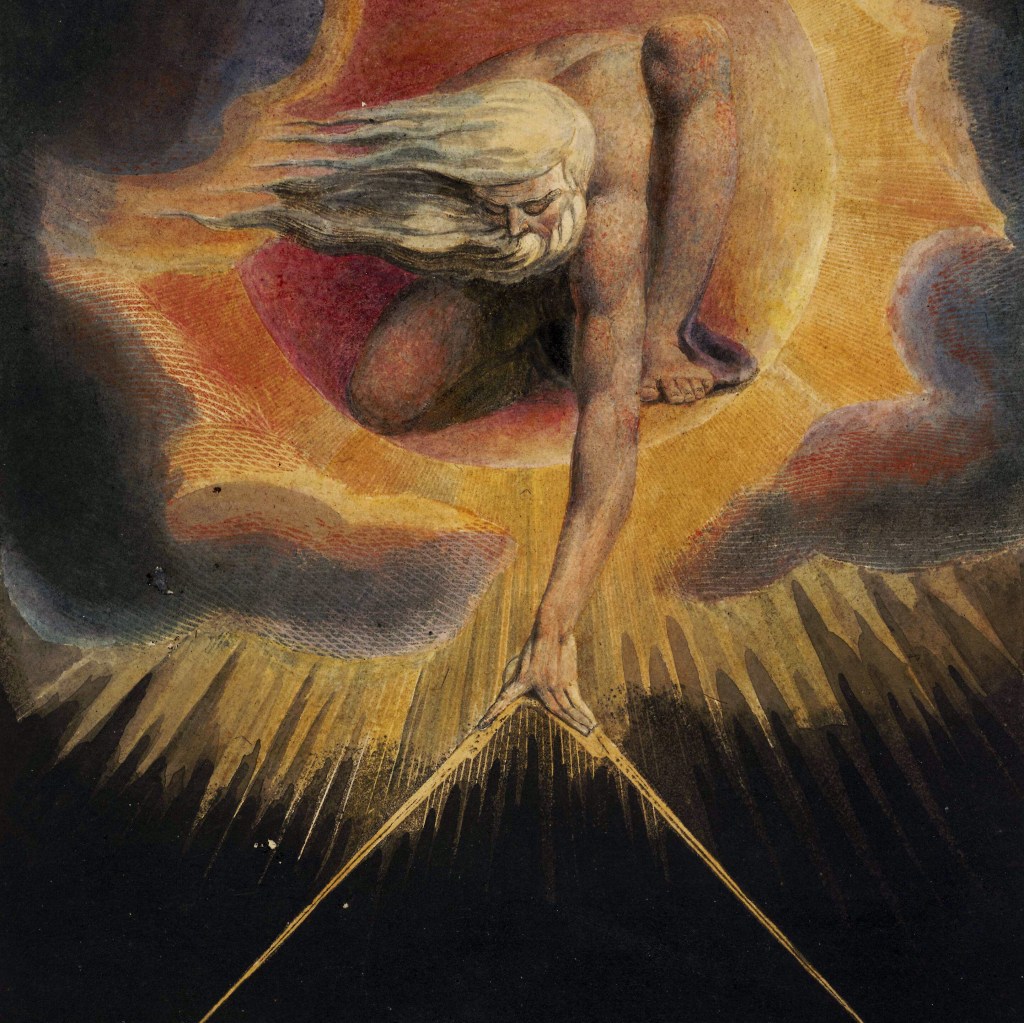
“….and in his hand
John Milton, Paradise Lost
He took the golden compasses, prepared
In God’s eternal store, to circumscribe
This universe, and all created things…”
In Milton’s epic poem, the golden compasses are a circle-drawing device used by God to establish the bounds of creation, therefore they are ‘all-knowing’ because they encompass all that is. And if we believe in the idea of fate, then all that is fated is known to the Creator and must exist within the world he has created. Anyone who can tap into this knowledge will gain great insight into their fate or will be able to predict future events.
The Alethiometer allows Lyra to predict a course of action when things go wrong, helping her to stay one step ahead of her enemies. Readers of the Tarot might well surmise that this device is not dissimilar to the Tarot deck. Symbols for the sun, the moon, death, motherhood, the world, and the child echo archetypes we meet in the Major Arcana, and like the Tarot, the meaning of each symbol changes when it is part of a combination.
Even though many symbols are unique to the Alethiometer – such as the serpent, the candle or the beehive – their meanings can be found within the Tarot’s Major and Minor Arcana. The serpent symbolises evil and natural wisdom, and evokes The Devil card; the candle symbolises fire and learning and suggests The Hermit; the beehive symbolises productivity and working together, as does the Five of Wands.
It’s hard to know if this was Pullman’s intention, although the existence of the Gyptians in his story suggests a nod to the Tarot readers of Romany peoples. He also introduces a second form of divination in The Subtle Knife (the second book of the first trilogy). In this book, the physicist Mary Malone, discovers that she can use the I-Ching, an ancient form of Chinese divination, in the same way that Lyra uses the Alethiometer because both can communicate with Dust.
What makes Lyra unique is that she can read the Altheiometer intuitively, allowing her sense of gut intuition and imagination to steer her, though normally this process takes many years of scholarly training alongside unwieldy tomes of symbol keys. When we encounter an adult Lyra, she no longer needs the compass but intuits the answers to these questions through her conscious mind, as if she has internalised its power.
We might even characterise Lyra as a Witch – she is parted from her daemon in The Amber Spyglass after entering the Land of the Dead, a feat only witches like Serafina Pekkala are able to undertake. This allows her to separate at will from her daemon, Pantalaimon, and in The Secret Commonwealth she is frequently mistaken for a witch by virtue of being without her daemon. Ironic, given that the idea of the daemon is partly based on the witch’s familiar.
Who knows what Lyra’s destiny will be – we have to wait until Pullman has finished his third, as-yet-untitled The Book of Dust, to find out whether Lyra really is a kind of witch or simply someone who possesses witch-like abilities. (Let’s not forget that her mother, Mrs Coulter, was also able to separate from her golden monkey daemon). With Lyra’s ability to find the truth in others echoing the act of Tarot reading, will she finally find the truth in herself?
Paull Blakeman is the author of The Moon & The Priestess – Accessing the Creative Unconscious with Tarot’s Archetypes, available here.
 Paull Blakeman
Leave a comment